Atrios has created a list of the types of people he finds most annoying and Chuckling is #1!The Defeatists - Doom and gloomers who know it is all hopeless, who know that we can't win elections, or that if we do win elections nothing will improve, and who think that people who bother to try are just wasting their time. Why these people spend so much time paying attention to this stuff if there's nothing to be done I do not know. If you really feel that way go do something else with your time, otherwise I expect you're just addicted to the sweet thrill of self-righteous outrage.
Yep, that’s me. And it’s unfortunate he feels that way, since I like and respect Atrios and the work that he does. Nevertheless, perhaps I can be of some help by answering the question of why we poor chuckling dead-enders spend so much time paying attention to politics when there’s nothing to be done.
It’s really not so complicated. Watching politics is like watching sports. Politics, football, basketball, lacrosse -- they are all just games and our potential for influencing the outcome is just about the same. We watch them because we find the games interesting. Plus it’s fun to root for your team, to revel in their wins, to suffer through their losses. And there is also the flip side, the schadenfreude, the relish of seeing the opposing team suffer.
So thank you very much Mr. Atrios for your advice on how I should pass the time, but if I like to watch games, and perhaps talk about them over a beer or two, well, that’s nobody’s business but my own. Certainly not yours.
And since I’m in a communicative mood, perhaps I can allay his suspicions that I am addicted to the sweet thrill of self-righteous outrage. It’s nothing so eloquently or existentially interesting as that. I can’t speak for any of my defeatist brethren, but I, at least, do not find self-righteous outrage sweet. I know that Mr. Atrios interacts with many more people than poor chuckling, but I wouldn’t classify those gloom and doomers I know as self-righteous. Realistic is the more accurate term. The sorry state of our body politic is not something to be happy about, much less self-righteous. That’s just the way it is. Sad.
Yes, it is sad. But what can we do?
Recent neurological studies, which will remain un-cited, indicate that such attributes as optimism, pessimism, or realism are hard wired into our human nature. Thus, those like Mr. Atrios who are optimistic and believe they can change things are in no way morally superior, nor are the more realistic among us. We were all just born that way.
Don’t get me wrong. I recognize that the optimists are largely responsible for the strides we humans have made from our chimpish beginnings and I respect the efforts of those who go beyond opposing the current body politic and actively try to change it for the better. Of course it would be unrealistic of me to fail to note that the conservative morons who have actively created this mess, or at least nurtured the environment in which it could develop, are optimistic go getters as well. Optimism about the possibility of changing the world for the better is not a universally positive attribute. “Better” means different things to different people.
Another study, or perhaps it is the same one since I am referencing memory, found that the best decisions were arrived at when different types of personalities were involved. As is so often the case, the aphorism “it takes all kinds...” is not far from the truth. It’s worth noting that the United States’ founding fathers, as well as the architects of the western European social democracies were more realistic, if not outright pessimistic, than optimistic. The societies they crafted were arguably designed to keep the optimists in check. So if the realists and pessimists among us took Mr. Atrios’s advice and left the optimists to their machinations, the world would not be a better place. It would likely be more of a bloody hell than it already is.
And it is not such a bad thing to recognize that on the grand scale there is little hope for the body politic or that life ultimately has no meaning. There are currently about 6.5 billion humans on earth living 50 or sixty years on average and human history goes back about 40,000 years. By contrast, the universe is 17 billion years old and there are at least 125 billion galaxies each of which contains about 200 billion stars. When you consider those numbers and their significance, it is obvious that our little lives have no greater meaning in the grand scheme of things than the lives of ants. And we’re not as different from ants as we’d like to believe. Our cities are like anthills and we spend our days building, gathering food, reproducing, and moving around with no apparent purpose. We are all just earth creatures, evolved from the same distant ancestor. I doubt an observer from a distant galaxy would see that much difference.
That’s not something we like to think about, but the realists among us cannot help but recognize the unavoidable truth of the proposition. But just because our lives have no ultimate meaning in the vastness of space and time doesn’t mean that they don’t have meaning within our limited existence. My life means something to my parents and my children and, if I live well, to a good number of other people as well. And many people’s lives have meaning for me.
And there are some people whose lives unquestionably have meaning, for good or ill, beyond their immediate circle of acquaintances, and even beyond their own time. People who get involved in politics can, obviously. change the world for millions, if not billions of people. But it’s a dangerous proposition and I think the founding father types had it right to try to hobble them.
I wish Mr. Atrios and his coterie well in their quest to better our lives, and I have even thrown a dime their way on a couple of occasions, but I am not an optimist. The fact that he is already creating an enemies list exclusively made up of people “on our side” bodes ill for the future. Power corrupts those on the left as surely it does those on the right. As the left ascends, it's likely they'll follow the same pattern as the recent right. Talking points will be distributed, the loyalists will repeat them, those who don't will be attacked, then purged.
The nonsense about surge/escalation is an early harbinger of that dynamic (it's clear that all the liberal bloggers have gotten the memo) and demonstrates how hopeless our prospects are on several levels.
First, the fact that nobody in America is capable of calling a troop increase a troop increase is distressing. As far as I can see, the entire major media has adopted the word surge for troop increase without so much as a quibble, unless you consider putting quotation marks around it a quibble. And the opposition media, the Daily Kos, other leftist blogs, Atrios, rather than call a troop increase a troop increase dig up the old propagandistic wussy-word escalation, a word designed, like surge, to avoid calling a troop increase a troop increase. What the fuck is wrong with you people?
I’m generally okay with using language intelligently to frame the debate, but using escalation instead of troop increase is not an intelligent use of language. An escalation sounds reasonable. Nearly everyone is against a troop increase. Just say the fucking words.
If, for whatever reason, the liberal bloggers can’t call a troop increase a troop increase, they should at least drop the wussy-words and come up with a good snarky substitute. Bush is reportedly going to ask for sacrifice as well as a troop increase. Perhaps we should refer to his plan as a troop sacrifice? Try it out. Bush’s plan to sacrifice more troops? Personally, I think calling a troop increase a troop increase is as effective as it’s going to get, and very effective at that.
It’s issues like these that make me doubt the literal existence of the Democratic party. So often it seems like they are the political incarnation of the Washington Generals, the faux basketball team that is paid to lose to the Harlem Globetrotters. When they can’t take something as unpopular as a troop increase and slam dunk it in the Republican’s face (give them a facial, in popular terms), you have to wonder if the game is fixed.
Sunday, January 07, 2007
Atrios hates me

Monday, January 01, 2007
A surge in propaganda
I've noticed that Atrios and other liberal bloggers have been making a concerted effort to use the word "escalation" instead of surge, saying that escalation is the accurate term.
Actually, escalation is just the surge of stupid wars past, a propaganda term designed to make "increase the number of troops" sound like a good thing.
In general, I agree with this push to choose the words with which to frame the debate, but I'm uncomfortable when it turns into misleading propaganda.
In the case of escalation, however, I don't think it's misleading propaganda as much as a poor choice of words. The honest and accurate description -- "increase the number of troops" -- is a much more effective, from an anti-war perspective, than escalation, which was originally, as noted above, a pro-war propaganda term itself.
Not only that, but escalation, like surge, is a weak word, which is why they use it. Think of the words we use when we want to make the opposite argument. We do not demand that the Bush administration ebb the troops. No one at a protest rally screams de-escalate now! No, "bring home the troops" is the powerful phrase. It is powerful because it is honest and direct. It is powerful because it brings humans into equation as well as the concept of home.
By the same token, the words surge or escalate have no human connotations. But "increase the number of troops," now those are some powerful words. People know exactly what they mean.
It's green, it's green, it's tangerine
My daughter and I saw Children of Men yesterday, the new movie directed by Alfonso Cuarón that stars Clive Owen. I was interested in seeing it because I liked the look Cuarón gave Prisoner of Azkaban, the third film in the Harry Potter series -- and Owen, who gave an interesting performance in Spike Lee’s Inside Man.
The first step in my approach to critiquing a film is to determine whether it is primarily art or entertainment. Of course it could be both, or neither, and I don’t necessarily consider art “good” and entertainment “bad,” but I feel the distinction is a helpful starting point. It serves no useful purpose to judge Monsters Inc. with the same criteria as Richard the III.
I consider Children of Men to be primarily entertainment. It is a dystopian sci-fi action-adventure that follows its main characters from point A to point B, forcing them to overcome ever more formidable obstacles along the way.
The most important requirement for entertainment is that it entertain. This it does very well. The film is well paced, the slow parts are not too slow. They often contain humor and humanity and add depth to the characters. The action sequences are great, and not so sustained that the action becomes overwhelming. The acting is very good. In addition to Owen’s hang-dog performance, Claire-Hope Ashitey provides spunk and attitude, Juliette Moore does a worthy star turn and Michael Caine goofs it up, adding some much needed levity to the proceedings.
I say “much needed levity“ because Children of Men is not a light film. It is, in fact, very grim, which explains why a big budget blockbuster-type movie with an all-star crew and cast is playing in only three theaters in New York and given next to no publicity.
Much of the plot could have been stolen from Michelle Malkin’s wet dreams. As we follow the main characters from their point A’s to their point B’s, we see unremittingly bleak images of refugees/Illegal aliens in the background being brutally chased, herded, beaten, tortured, and killed with impunity.
And it is perhaps the most violent film I have ever seen. As a Natural Born Killers aficionado, I do not say that lightly. But if someone were to do a body count, like they did with NBK, I’d wager Children of Men would easily take the prize.
Yet we did not find the violence overwhelming. My daughter said it was because there was not much blood. Yea, I replied, but there were a lot of limbs.
And thinking back, I realize that there was a lot of blood as well, but it was not obvious because of the film’s palette. As he did with Azkaban, Cuarón removed nearly all of the magenta from the film, leaving it with an aquamarine cast and strong yellows. So the blood was mostly shadow with only the deepest reds showing through. You really only noticed it when it pooled. The splatter was mostly lost.
Beyond the palette, Children of Men was incredibly well filmed and edited. The action sequences are fantastic. I am not a war movie nerd, but I would guess that the final action scene is one of the best battle sequences ever filmed. It is certainly very good.
The plot is mostly coherent. It is adopted from a novel by P.D. James, the mystery writer who apparently went off the reservation in the early 90's and wrote a grim sci-fi novel that foresaw the direction of our future. There is only one scene, near the end, that intrudes on the suspension of disbelief. It’s unfortunate, and could have been easily rectified, but does not do much to mar the overall achievement of the picture.
Children of Men may be primarily entertainment, but it is not stupid entertainment, nor is it artless. If you like a very good dystopian action-adventure and can stomach a lot of very stark violence, or if you are into cinematography, I recommend it.
Update: If you want to get a taste of the look and feel, here's an interesting video montage someone made. I don't think it will spoil much of anything, but I could be wrong, so view with trepidation if you plan on seeing the movie.
Sunday, December 31, 2006
Another new york moment
Perhaps my iconic New York moment took place one day on Houston street, near Katz’s deli. I was walking down the sidewalk and after a few minutes, I noticed that every car on the street was honking its horn. The “after a few minutes” is the key to that moment. A crowded city street, cars backed up, probably all the way across Manhattan, every one of them blowing its horn. It was very, very loud. Yet I am so acclimatized to the noise that 500 cars honking their horn only intrudes on my consciousness after a few minutes, and then only because of how long it’s gone on. The noise itself is unremarkable.
I was reminded of that on the bus the other day. If you’re ever in New York and are the type of person who likes to get away from the tourist traps and see the “real” city, I recommend a ride on the B35. It starts in a warehouse district well-seeded with strip clubs and porn shops, makes its way through Sunset Park, a major Hispanic neighborhood, catches the edge of Brooklyn’s Chinatown, cuts through a corner of Borough Park, an orthodox Jewish neighborhood, then all the way down Church avenue through Bangladeshi, Pakistani, Polish, Mexican, Central American, Haitian, and West Indian neighborhoods all the way out to the mean streets of the East New York ghetto. Around the world in Brooklyn or It’s a Small World in Hell?
So my wife and I are on the B35 and after a few minutes I notice that people are screaming. In retrospect, I realize that the volume has been increasing for awhile. Then the F bomb explodes through the pop pop pop cadence of the Haitian Creole and the wild tonal swings of the English West Indian dialect and the Spanish (who knew that there were Spanish speaking Muslims in Brooklyn?) on the periphery and I realize that it’s gotten pretty damn loud in here.
The primary commotion is between two large black women, each with two kids. Apparently a woman from the English speaking West Indies sent her daughter up to pay the fare and leaned a stroller up against a seat to save it for her. Then, reportedly, the woman from Haiti came along, contemptuously pushed the stroller aside and sat down in the seat. A few insults were exchanged and the confrontation escalated quickly into a devastating war of words that left both sides badly shaken.
To get the full flavor, you have to imagine it in a West Indian accent.
Insults about speaking a foreign language.
Insults about English language accents.
Accusation that people like her are why white people look down on black people.
You are uneducated.
No, I have a bachelor’s degree. I am an artist.
No, you are uneducated, and you are no artist. You are too ugly to be an artist.
No, you are uneducated, I’ll show you my card, and I am an artist. And you are the ugly one.
No, you are the ugly one, and you are uneducated. I am enrolled at the university. You are so ugly.
No, you are so ugly, and you are uneducated, you are not enrolled at the university, show me your card. You are so ugly. And you are on welfare.
I’ll show you my card, and I don’t see your card. You don’t have no card. You are too ugly to be an artist. You are uneducated. And ugly.
No, You are ugly, and you are uneducated, and you are on welfare. You look link a monkey. Why aren’t you in the zoo, you ugly welfare monkey?
And so on.
In addition to being very, very sad on so many levels, the choice of words the women employed in this war were interesting for what they illustrated about their perspectives. Pretty much every insult concerned the ability to fit into the dominant American culture. What would white people think? The importance of having a college degree. The stigma of welfare. The implied stigma of being of recent African descent. The overall importance of appearances. Ugly was the weapon employed most often. Ugly was the word that cut the deepest. Both of these women were seriously overweight. Neither was what anyone would call good looking. From an American cultural perspective, they looked exactly the same. They were ugly.
So they smack each other in the face with this word, they whack each other on the head. But ugly is more than appearances. Ugly is the lack of education. Ugly is welfare. Ugly is Foreignness. Ugly is African. Ugly is un-American.
Of course I don’t believe these things. The ugly I see in this incident is the ugly of poverty in a land of obscene wealth, which is the root cause of all the other uglies.
The ugliest thing concerning the immediate human beings was the devastated look on the women’s faces. Neither won that battle. They both lost big time and were severely hurt.
But in long view, the ugliest thing was probably that the children were there to witness it. To hear their mother called ugly and uneducated in front of a bunch of strangers. And frankly, to watch their mothers act so ugly in such a public place. The look on the children’s faces was not ugly. They looked sheepish. They looked embarrassed. But the ramifications for their psyche? That’s got to be ugly.
Thursday, December 28, 2006

Monday, December 25, 2006
An ongoing struggle

Here are some fall photos from my Greenwood Cemetery project. I suspect I've mentioned before that I am involved in an ongoing struggle to photograph this cemetery. Although mostly forgotten by the tourist industry, Greenwood is one of the premier attractions in New York City. It is beautiful, quiet and historic. It contains a wealth of natural beauty and quite a bit of interesting art and sculpture.
Yet I have found it very difficult to photograph and have not seen particularly good work from anyone else. Its beauty is obvious to the human eye, but harder discern for the camera. Anyway, I am not there yet, but seem to be making progress.
Saturday, December 23, 2006
Sympathy for the conservative in us all
I’m a generally happy guy. I don’t remember ever getting pissed off about anything concerning Christmas. There were a lot of years when I didn’t give a shit one way or the other, but since having kids of my own I’ve always enjoyed it in a traditional way. Every Christmas Eve we have the turkey, dressing, mashed potatoes, etc., with a bottle of wine and a Port for a digestif in a good year, then the kids are allowed to open a present or two and we all watch It’s a Wonderful Life. Then Xmas morning we open the rest of the gifts, have a nice breakfast, and spend most of the day playing with the kids' new toys. This is, for the most part, as it was in my childhood. I’ve replaced church with the movie, but otherwise have maintained the tradition
But today I turn into a seething conservative-like maniac. My wife’s family never celebrated Christmas and she usually does well to tolerate my insistence on tradition. Can we have lobster instead of turkey for once? No. Do we have to watch It’s a Wonderful Life again? Yes. Can we open half the presents on Xmas Eve? No. And so on.
Anyway, this year her nephew invites us to a Christmas Eve party in Jersey. Being from a family that doesn’t celebrate Christmas, and young to boot, he apparently has no idea that people with kids don’t generally trudge off to Jersey on Christmas Eve to go to a party with a bunch of strangers. Beyond the mere fact of trashing my lifelong Xmas tradition, it would require us taking three trains and a bus. We would be lucky to get home by 1 am. I was shocked that she would even consider the idea. She was shocked that I would be disagreeable about the issue. Each was seriously disappointed with the other. You really would not believe how rare it is for us to have a disagreement of any magnitude. It was not a good way to start the day.
And while this internal discord is going on, the landlord is having work done on the eave outside my window. Three Mexicans are on the roof blasting Cumbias and operating power tools.
Then I go out to get the Turkey and the fixins. The supermarket is a horror show. It’s packed, taking 10 minutes to navigate any one of the narrow aisles. Everybody is in a nasty mood. I make the mistake of getting in line behind an Asian with a nearly empty shopping cart and predictably the rest of the family arrives with three more carts and cuts in front of me.
And it’s like 80 fucking degrees outside and sunny. There’s a Cadillac Escalade with ghetto hop going thumpa thumpa, niggah niggah. The Jews are bickering and the Muslims haggling over pirated DVD's on the sidewalk. Dueling eastern Europeans with cheap Casio’s are blasting horrible Christmas music on opposite sides of the street. People are speaking Polish, Russian, Hebrew, Spanish, Albanian, Arabic, Hindu, whatever the fuck they speak in Bangladesh and Pakistan and who knows what else. I feel the Edward Norton character in 25th Hour. I just want to cuss them all.
And more than that, I just want a traditional white Christmas. I want to be sitting in a lonely farmhouse on a hill, looking out a frosty window at snow covered hills, hearing the ring-a-ling of approaching sleigh bells in the distance. Or in a small town with carolers and Christmas lights and a fresh dusting of snow unmarred as yet by tire tracks. But no, it ain’t happening. It just ain’t.
Of course I realize that the problem is me and I pick up a liter of Kentucky straight medicine in the hope of changing my perspective. My kid’s sitting under the Christmas tree shaking every gift, constantly scheming to open a present or five before the traditional time and this is as irritating as the heat and the noise and the foreigners and I know that I am wrong. The kid shaking the presents, the excitement in his eyes, this is what our Christmas tradition is about. I forcibly unclinch my teeth and try to soak up some of his spirit. A couple shots of medicine and I’m almost there.
So I take him out to see Night at the Museum, the season’s Ben Stiller comedy. The sun is setting. Now the people, their different dress and language, the dueling eastern European keyboardists and their music are all beautiful. The Muezzin is calling the faithful to prayer and there is a crescent moon. It’s all so beautiful I would probably weep if I were a sissy.
And the movie wasn’t bad. We walked home through the old Irish neighborhood and looked at the elaborate Christmas decorations. The wife was happy again when we returned. A little more medicine and a nice meal and hear I sit, the holidays lookin good again.
So I got a little feel of what it's like to be a conservative. The tradition part is nice, but that's not the property of conservatives. It's the hate that separates them and it sucks. It really does.
So happy holidays, whoever you are.
It's a wonderful life in pottersville
 "When we consider the character of any individual, we naturally view it under two different aspects; first, as it may affect his own happiness; and secondly, as it may affect that of other people."
-- Adam Smith, famous Free Market Philosopher
"Remember, no man is a failure who has friends."
-- Clarence, 2nd Class Angel in "It’s a Wonderful Life."
It’s the holiday season again. Millions of people will watch It’ a Wonderful Life, the 1946 Frank Capra movie starring Jimmy Stewart.
It's a life affirming movie with wonderful characters and a happy ending. There’s dancing and romancing. Good triumphs over evil. The little guy wins. It’s even got angels. In short, it has the kind of plot elements that appeal to the masses, but would normally make people like myself want to puke.
Yet "It’ a Wonderful Life" has somehow managed to transcend that angel sodden sugar plum plot synopsis and become an integral part of the holiday tradition, not just for those who believe in angels, but for others as well, including my own family.
Our eyes grow moist at crucial points throughout the movie. George saves his brother from drowning, saves the druggist from a tragic mistake, saves Uncle Billy from the mental institution, saves Violet Bick from becoming a drunken harlot, and ultimately saves Bedford Falls from becoming Pottersville. Tears flow freely when we learn that George Bailey, not Mr. Potter, is the richest man in town.
When the movie was released in 1946, few could have guessed that it would attain the status of timeless masterpiece. "It’s a Wonderful Life" was a box office flop and financial disaster that bankrupted its studio. Although nominated for several Academy Awards, it didn’t win in any category. It may seem strange to us now, but people felt that the movie was too political. And it is a very political movie. But with the passing of time and collective education, It's a Wonderful Life has become like This Land is Your Land by Woody Guthrie. Rabble rousing art turned patriotic blather for the masses. Everybody knows the words, but their meaning has been lost in the ether.
George Bailey is a child in the years immediately following World War I. He’s a teenager in the Roaring Twenties, a young man during the Great Depression and a middle aged family man through the end of the Second World War. Those years span momentous eras in the history of the United States. From the general economic well-being of the war years through the record setting prosperity of the 1920’s to the Great Depression of the 1930’s, society was rocked by wild mood swings and extreme changes in fortune and financial well-being. Radically different philosophies were embraced to explain the times. Each new era seemed to prove false the philosophy of its predecessor.
It’s a Wonderful Life presents those philosophical arguments just beneath the surface. George Bailey’s struggle with Mr. Potter for the soul of Bedford Falls pits the individualistic moral universe of the Roaring Twenties against the community oriented struggles of the Great Depression and war years. The arguments pitting the good of the community vs. the greed of the individual are not only illustrated by the parallel lives of George Bailey and Mr. Potter, but also by the parallel universes of Bedford Falls and Pottersville.
In Bedford Falls, freshly fallen snow blankets the town square. Patriotic buntings deck the walls and buildings. Main Street is empty at night save for a few parked cars and some lonely tire tracks in the snow. The trees are bedecked with Christmas lights. Precocious little boys sled down a hill onto an icy pond. Little girls in ribbons and bows twirl on soda fountain stools. People treat each other with respect. The cops and the cab drivers are nice, happy people. Christmas wreaths and glowing candles in the windows of classic American homes appear warm and inviting.
In Pottersville, nothing is warm and inviting. Certainly not its Main street panorama of nightclubs and bars that serve "hard liquor to people who want to get drunk fast." Blinking lights and cold neon signs garishly advertise the Blue Moon, billiards and fights every Wednesday night, the Indian Club, cocktails, pawn brokers, dancing at the Midnight Club and gorgeous girls who will jitterbug for a dime a dance.
The same men who are warm, fun loving guys in Bedford Falls – Bert the cop Ernie the cab driver, Nick the bartender; are angry wrecks living in broken down shacks in Pottersville. Women like Mary and Mrs. Bailey who were safely ensconced in the warmth of family and friends in Bedford Falls are lonely, cold and afraid of strangers in Pottersville.
The message was clear in 1946. George Bailey’s community spirit resulted in a better society than Mr. Potter’s relentless pursuit of financial self-interest.
Judging by the box office, people didn’t want to hear it back in those days. But somehow in our own time, that message has much more resonance.
It’s a bit ironic, because, let’s face it, we’re living in Pottersville.
An aspiring Capra could easily put together a montage of images depicting a Pottersville-like panoply of strip clubs, porn shops, casinos, bars, cops, and mean drunks in any decent sized city in the USA. The necessary footage is all too easy to come by.
And the similarities between Pottersville then and USA now do not end with the nightlife. Like the 1920’s that Pottersville depicts, we live in a time of record setting prosperity and technological revolution which is creating, or at least further entrenching, a class of super wealthy and a government that exists to protect their interests.
Then, as now, the rich, and the minority of people who participate in the stock market are getting richer a lot faster than those who have to work for a living. In 1920’s Pottersville the wealthiest 1 percent' controlled a statistically inordinate amount of the nation’s wealth and that number was compounded daily by the inexorable march of interest. Today, the top 1 percent of Americans own more than 35 percent of the nation's wealth, and one half of the population has less than $1000 in net financial assets. The government of both eras exacerbates the disparity though regressive tax policies and loopholes for wealthy campaign contributor types, John D. Rockefeller has been reborn as Bill Gates.
Then, as now, a technological revolution has provided more jobs. Back then skilled labor gave way to assembly lines that have now become customer services and teleservices and shipping and handling. Working in a phone center in Tucson or an IT department in Manhattan is the 1990’s equivalent of working on the assembly line in the 1920’s. No serious education is required.
As wages for the majority stagnate or decline, consumer debt keeps setting new records. The mailbox is full of easy credit.
We know that the 1920’s ended with the stock market crash and the beginning of the Great Depression. To the great surprise of conservatives everywhere, it turned out that things such as ever increasing income disparity and massive consumer debt that could not go on for ever didn't. One rich family could have thousands of times more assets than thousands of middle class families, but they didn’t buy a thousand times more washing machines. Not then, not now. Business fundamentals eventually brought stock valuations back in line with reality.
Although It’s a Wonderful Life deals with these grand issues, what sets it apart from other political message movies is its focus on the value of an individual life.
And paradoxically, that is the great lie at the heart of the movie - that the life of anyone like George Bailey would have any significant influence on the life of a city like Bedford Falls, much less the country.
Wars and recessions; boom times and depressions will come and go. Adam Smith’s "Invisible Hand" will continue to assure social results that are independent of individual intentions.
Ultimately, what separates people in It’s a Wonderful Life isn’t their interest in accumulating wealth but their attitude towards it. George's life long friend Sam Wainwright pursues wealth with the same single-minded intensity of Mr. Potter, but he wants his friends to get rich too, unlike Mr. Potter who tries to keep it all for himself.
Like the great majority of Americans, George Bailey never becomes inordinately wealthy. But, like most of us, he learns that the value of family and friends is more dear than the value of money.
George Bailey will be the richest man in town in any era. Although Pottersville may be just outside the door, that’s not an entirely bad thing. If one is so inclined, what’s so wrong with enjoying a jitterbug with a pretty girl in a gin joint from time to time? We can still be good people, even here in Pottersville.
Thursday, December 21, 2006
Make your holiday complete
A quick programming note. On Christmas Eve, I will publish my annual review of It's a Wonderful Life. It's a holiday classic you won't want to miss.
A surge in obsequiousness
Has anyone else noticed how the media so readily adopted the latest Orwellian term coming out of the white house, to write "surge option" instead of "increase the number of troops?"
I know we've seen so much of that over the past six years, and perhaps I just wasn't paying attention, but I've never noticed it being so total so fast. The first few stories I read put "surge option" in quotation marks on the first reference, but since then that's all they use.
A glance at the British papers, on the other hand, shows that they only use "surge option" when quoting someone. Otherwise, they use the accurate words, "increase the number of troops."
Why, oh why, does no one call the press out on this? I havn't seen a single word of complaint in any of the major papers or intelligent blogs. I know, I know, the bullshit and lies fly so fast and furious, it's just overwhelming.
Unfortunately, they see that the "surge option" is so effective with bullshit and lies that they think it will work with armies and lives. Tehy'll get a surge all right. A surge in death and destruction.
Another day in hell
I climb 13 flights of stairs in the subways on my regular daily commute, six on the way to work, seven on the way back. On many days, due to the impeccable timing of the MTA, I have to sprint up four particularly steep flights if I don't want to miss a connecting train.
Overall, I consider this a good thing. I am old and fat and climbing the stairs is usually the best, and certainly the most consistent, intense cardiovascular excercise I get, so if I don't keel over, it is probably good for me.
Another little known fact about New York is that there are homeless people. Not very many, by west coast standards, or even D.C., but although ours are few, they often smell much worse than the more numerous homeless folk in other towns.
These two facets of life in the big cesspool came together for me today. After sprinting up four flights of stairs, grabbing the subway doors and using all my strength to keep them open until the conductor relented and let me in, I found myself huffing and puffing in one of the smelliest cars I've ever had the misfortune to ride in. The eau de homeless was so strong it was almost as bad at the far end of the car as it was next to the poor soul from which it emanated, who was right next to me when I entered. Gasping for breath after the sprint, I'm sure I inhaled several decades worth of eau de homeless before the train got to the next station. Then when I got off the train, I set my bag down in a puddle of piss.
Otherwise, things are swell with the holidays coming up and, lacking smelling salts, I'm waving a glass of rum under my nose to make it all better. Soon I won't be smellin a thing.
Saturday, December 09, 2006
Not bad for a big budget action movie

I saw Apocalypto tonight. I’m not a big fan of big budget action movies, but as those things go it wasn’t bad. There was plenty of blood and action, some beautiful women and a few tits. The scenery was different and often striking, the costume and language interesting. A typical action movie. Mad Max on foot. A mostly mindless way to spend two and a half hours. Great art, however, it was not.
I’ll break from my usual practice of not giving away the plot because it is boilerplate big action movie. All is wonderful in the beginning. Bad things happen. A lot of people die bloody and spectacular deaths. The hero overcomes great obstacles and saves the girl. The end.
The opening scenes are based on Neil Young’s Cortez the Killer. Indians live happily in a forest paradise. The women all are beautiful. The men stand straight and tall. Sexual hijinks ensue. Everyone is laughing and having a good time. Then some bad dudes from the city, led by a guy who’s Nagual name translates as “The Lord Humongous,” leads his men on a rape and killing spree and hauls the survivors off to the big bad city to be sold as slaves or slaughtered. Along the way they meet a creepy little girl who foretells the rest of the movie in cryptic sentences that all come to pass. Then the Deus ex machina goes into overdrive, a convenient solar eclipse allows the hero to escape the obsidian knife that is about to cut out his heart. Then he runs at full sprint for at least 24 hours after several days of beatings and privations then getting speared through the chest. Along the way, he outruns a jaguar, jumps off a waterfall, struggles his way out of quicksand, takes another blow to the head and an arrow through the chest, all the while getting stronger and killing his pursuers in the best horror movie fashion. The best part was where he cracks a bad guy's skull and the blood sprays out in a fine mist. The audience got a few chuckles from that one. Will he escape the bad guys? Will he save the girl? It’s a cliffhanger. Yep, a cliffhanger. That’s what it is.
Then at the end, when he has no where left to hide and no more chance to escape, Cortez shows up and distracts the warriors that are about to kill our hero. I kid you not. Fucking Cortez! There were quite a few chuckles in the audience about that as well.
As I said above, not a bad action movie but not great art by a midnight mile. The only element of any interest whatsoever is the depiction of the Aztecs. They are portrayed as a sick and brutal people. They cut out people’s hearts, cut off their heads and toss their heads and bodies down the temple steps. There are quite a few skulls around and piles of bodies are a common site.I don’t have a problem with that. In real life, the Aztecs were a sick and brutal people, pathologically so, unrivaled in all of history on that score. The were as bad as the movie depicted them on a good day and usually a helluva lot worse. But there were also a lot of beautiful things about their culture and little or none of that was displayed. Too bad.
The movie opens with a quotation about how great civilizations are only defeated when they rot from within. I guess that was a comment on the Aztecs and Cortez’s arrival, but it could have something to do with the political situation in Australia. I don’t know. I don’t follow those things. Or maybe it’s a reference to the Jews. Were there Jews in Mesoamerica? Did they bring down the Aztecs from within? I guess if you believe the Mormons, it’s possible.
Anyway, character development is not handled well. The dialogue telegraphs that the main character is supposed to overcome his fear, but he never seems that afraid in the beginning so when he overcomes it in the end, it’s not much of a change, if at all.
The direction and cinematography are average for big budget blockbusters. There are a few nice shots of the jungle, the Aztec city is marginally interesting. That’s about it. There’s a lot of running through the forest, but if you want to see how that’s handled by a master, check out Rashomon.
It would be nice to see a genuinely good movie about the Aztecs. If Hollywood ever asks me, I’ll recommend adopting the short story The Night Face Up by Julio Cortâzar. Or if you are really interested, read This Tree Grows in Hell by Ptomely Thomkins. It’s one of the best books I’ve ever read on any subject, fiction or non. Dr, Chuckling’s advice? Skip the movie. Read the books.
Update: Now that I'm reading reviews, I notice that every reviewer refers to the Mesoamericans depicted in the film as "Mayans." I don't know where this came from, presumably Gibson or his production company. I don't know if that's some kind of joke on the media, or what, but they are obviously based much more on the Aztecs than the Mayans. The temples, the ceremonies, and the bloody fact that the Spanish galleons arrive at the end leave no doubt.
Update II: Rex Reed in The NY Observer has a similar take, but phrases it much better.
A question of magnitude

Our insane right wing friends – the Rush Limbaughs, Richard Perles, John McCains, as well as the cowardly keyboarders are in extended two minute hate mode over the bipartisan Iraq Study Group's analysis of American policies in Iraq and its proposals to minimize the damage. Never mind that it is only bipartisan in the sense that it includes both Republicans and conservative Democrats who were stupid or cowardly enough to support the idiotic war when they had a chance to do something to stop it. Might as well just save words and call them morons, eh? And never mind that their proposals are equally insane, though certainly not as disasterous as Bush's "path to victory," which stripped of newspeak translates as " catastrophic downward spiral." What Iraqi army are they planning to train? There is no Iraqi army. Only factions.
In any case, our rightwing brethren, those who have been astoundingly wrong about everything, have a point. The ISG's report does not contain a plan for victory. If it is not, as they say, a plan to surrender, it is certainly a plan to retreat. If it is not an acknowledgment of defeat, it is an acknowledgement of inevitable defeat if we keep trying for victory.
The nutcase argument in favor of victory will resonate with a lot of Americans. After all, most people would agree that victory is good and that defeat is bad.
The problem, however, is not that we will be defeated when we withdraw from Iraq. The problem was that we were defeated when we invaded. All that's left to sort out is the magnitude of the defeat. And every day we stay, it just gets worse.
But the idea of not admitting defeat, of doing what's necessary to achieve victory could resonate beyond the right wing fringe. Everyone, even Bush, admits publicly that the present policies are not working, that changes will have to be made. I don't doubt that Bush is capable, if not likely, to advocate change by staying the course, but the only two logical alternatives are leaving or putting in more troops.
My guess is that we will put in more troops. Athough this is insane, it is the only thing that makes sense if one is still deluded enough to believe that there is any hope of victory. It is the "Lyndon Johnson" approach and will have a similar result. Many, many more dead and violent spillover into other countries before the inevitable denouement. And the inevitable denouement in this case is significantly worse than Lyndon Johnson's war. Dominos may not fall, but they will take a lot of damage.
Dr. Chuckling, however, has a can't fail plan for ultimate victory. It's called international rule of law and it's the only hope we have. Pretty much all educated people used to know this, but our right wing brethren and their joe sixpack and religious nutcase enablers were not among them. Unfortunately they gained power and fucked up everything for years to come, if not forever. But things can change. Blowback can happen and it doesn't just go from right to left.
But what to do in the short term? How to stop the troop increase that John McCain advocates? You'll see. Soon it won't just be McCain. It will be the entire right wing hate machine. Throwing more death at the problem is all that's left to them.
Dr. Chuckling has a short term plan as well. He recommends labeling the idea of increasing troops in Iraq as the "Lyndon Johnson strategy." Everyone with a platform should repeat it over and over again. The Lyndon Johnson strategy, the Lyndon Johnson strategy, the Lyndon Johnson strategy.... Didn't work then, won't work now.
Thursday, December 07, 2006
A two-headed child or a headless calf?
I've been suffering through a period of brain death lately and have not written, or created by other means, much of anything. Fortunately, the big television died and there isn't much on anyway, so I've been passing the passing of my intelligence by reading. I read Brooklyn Follies by the bad man, Paul Auster, the children's book Holes, and several books of science fiction nonsense.
Now I'm bogged down in more challenging stuff: Blood Orchid by Charles Bowden, Tests of Time by William H. Gass, and Rios Profundos by José María Arguedas.
These books are not what you'd generally call page turners. The writing is so great that you stuck in sentences, or paragraphs, or perhaps on rare occasions, even pages, and they fill your head so full that it's difficult to keep reading. So I switch off to another book and the style is so radically different that it takes a several minutes to make sense of the words and I have to read again.
In any case, maybe when I'm smart again I'll tell you about it. I know there's a lot of demand for the ol Bowden/Gass/Arguedas review, but it will have to wait. In the meantime, though, I will share with you this paragraph from Rios Profundos, just because it's about words, and me like words.
The Quechua ending yllu is onomatopoeic. Yllu, in one form, means the music of tiny wings in flight, music created by the movement of light objects. This term is similar to another broader one –illa. Illa is the name used for a certain kind of light, also for monsters with birth defects caused by moonbeams. Illa is a two-headed child or a headless calf, or a giant pinnacle, all black and shining, with a surface crossed by a wide streak of white rock, of opaque light. An ear of corn with rows of kernels that cross or form whorls is also illa; illas are the mythical bulls that live at the bottom of solitary lakes, of highland ponds ringed with cattail reeds, where black ducks dwell. All illas bring good or bad luck, always to the nth degree. To touch an illa, and to either die or be resurrected, is possible.
Kinda makes me want to learn more Quechua.
Sunday, December 03, 2006
Thinking the all too thinkable

I fear we’ve been lulled into a false sense of security by the lack of major disaster in the last year. It’s understandable. September 11, the ongoing disasters in Iraq, Afghanistan, New Orleans, government services, massive election fraud and in everything else George W. Bush and his henchmen have touched provides us with a feeling that it can’t get any worse. But it can always get worse. It can, it can.
George W. Bush is perhaps the biggest loser in the history of the world and he has two more years to foster new disasters or ignore warnings that could have prevented them. We know something's coming, at least one miserable failure, but we don’t yet know what form it will take. So in order to get ahead of the game, I’m listing a few possibilities and their likelihoods.
Disasters can come in three categories: National Security, Natural and/or Political. Am I missing anything?
National Security Disasters
Possibility: Terrorist attack.
Likelihood: Almost assured. The fact that there has been no major terrorist attack in the United States since 9/11 is Bush’s only positive accomplishment. It is highly unlikely that Bush will leave office with any positive accomplishments.
Possibility: War with Iran
Likelihood: Fair to High. Attacking Iran would be so mind numbingly stupid that the armed forces might refuse to follow orders. But unfortunately, fostering a breakdown in the constitutional authority of the president would constitute a horrendous failure by itself, so we can’t rule it out. Otherwise, we know they are actively planning for a war with Iran and there is a large right wing constituency for it. Bush may feel that defeating the Mullahs and bringing democracy to Iran would be the crowning achievement in his legacy and that he has nothing left to lose but the lives of millions and the future security and prosperity of the United States. Just kidding, I’m sure the lives of millions and any likely negative consequences will not enter into his equations, which are something along the lines of 5 - 3 + 12 = 48.
Possibility: War with North Korea
Likelihood: Low. North Korea has nuclear bombs. Bush is a sniveling coward. If they somehow managed to nuke D.C., he could get hurt. Not gonna risk it.
Possibility: War with some small, weak country
Likelihood: Very High. If Bush could find some small country like Grenada or Panama to defeat, he might feel he could go out a winner. If Castro dies, which seems likely, watch out.
Natural Disasters
Possibility: Giant asteroid strikes earth, wipes out all human life
Likelihood: Small. But, if there is a giant asteroid hurtling towards us, it is very likely that Bush is ignoring the warnings. Maybe he doesn’t believe in asteroids, maybe he just thinks the “scientists” are trying to cover their asses, or maybe he thinks God will bail him out (again). Unfortunately, we’ll never know because we’ll all be dead.
Possibility: Very Nasty Hurricane
Likelihood: Small. Of course there will be a couple more hurricane seasons, and there may even be a big one, but after Katrina, state governments are on the ball and would not be dependent on Bush or his appointees being the least bit competent.
Possibility: Earthquake
Likelihood: High. Earthquakes happen all the time. It’s been a long time since one has struck the United States. And since the Pacific coast states are probably prepared, I’d guess it will happen in the midwest or on the east coast. If that happens, Bush will go into hiding, curl up in a ball and suck his thumb before emerging to trumpet his manly and agressive response to the disaster.
Possibility:Tidal wave
Likelihood: Fair. Most likely coupled with previously mentioned Earthquake. "Scientists" will warn Bush's aids, but they will be too afraid to disturb him when he's curled up in his fetal position, and he would ignore them if they did.
Possibility: Volcanic Explosion
Likelihood: Not likely, but possible. I recently read that Yellowstone sits on top of a super volcano, the kind that erupts every half million years or so and causes mass extinctions, and that it’s overdue. If anyone has bad enough Karma to set it off, it would be Bush.
Political disasters
Possibility: Declares national emergency, refuses to give up presidency
Likelihood: Low. If he were popular, it would be a near certainty, but only the most idiotic 30 percent of voters, and 90 percent of the pundits (Richard Cohen would lead the liberal apologists), would support him if he tried to do something like that now.
Possibility: Pardons everyone who ever kissed his ass or wrote him a check
Likelihood: Certain.
Possibility: Gets caught having sex with gay prostitute in White House.
Likelihood:Fair. You just know that he is worse than Clinton in every way. Can he get away with it for two more years?
There are so many more possibilities. Help me out here.
Tuesday, November 28, 2006
Miserable failure is too nice a term
Headline at the WaPo:
Marines Pessimistic on Anbar - Report says U.S. cannot defeat insurgency or counter al-Qaeda's fast growth in western Iraq.
Sunday, November 26, 2006
Dog bites man
Headline in the NY Times:
As Power Shifts in New Congress, Pork May Linger
Pigs may eat? Ya think?
Friday, November 24, 2006
Journey to the bottom of the well
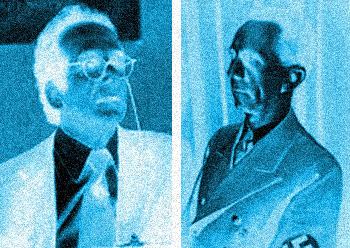
I almost never read Charles Krauthammer, not because I disagree with him, but because he has a funny name. Kraut Hammer. What the fuck is that? The German Hammer? Does he prance around his house in tights chanting Kraut! Hammer!? Sorry for that image, but I wouldn’t be a bit surprised. (note to young writers, making fun of a person’s name is always a good way to build credibility in an opening paragraph!)
But seriously, I almost never read Krauthammer because he is a man of low moral standards and a tool for the worst elements of Conservatism. I would just say he is an evil moron, which would be accurate in the vernacular, but I don’t like to use the word evil because of its supernatural connotations and the question of whether or not he is a moron requires a nuanced argument. Does he believe his own twaddle or does he simply espouse it to further some Conservative cause? If he believes it, he is clearly a moron. But I would argue that he is a moron even if he has a very high IQ and cynically and effectively uses it to craft arguments with the express purpose of suckering the rubes. That’s still stupid to me.
Regardless, genuinely stupid or not, he is definitely a man whose political desires, if fulfilled, would lead to a lot of death, destruction, oppression, and other bad things for the world. And unlike most of these terribly wrongheaded (to give them the benefit of the doubt) people, he is mysteriously granted a national platform to peddle his destructive nonsense. And reading him normally makes me sick. Not physically sick, but existentially sick, not just for myself, but for the entire human race. Sick that such creeps lurk among us. Sick that all too often they prevail. And doubly sick that a newspaper with the reach and prestige of the Washington Post publishes such a sicko.
Nevertheless, this morning my stomach is steeled with mass quantities of turkey and dressing from the night before and he was writing about Borat, so I read what he had to say. Krauthammer’s columns are always instructive in a bad way or two and today’s column was no exception.
He notes that Sacha Baron Cohen, aka Borat, went around the United States spouting anti-Jewish nonsense in order to expose the casual anti-Semetism, or indifference to anti-Semetism, of the American people, which Cohen maintains illustrates the path to the Holocaust.
Krauthammer’s argument is two-fold. One fold illustrates a tried-and-true propaganda technique, the other a logical fallacy.
Krauthammer does not dispute Cohen’s assertion that Americans are generally anti-Semetic beneath the surface or at best indifferent. He argues that we should instead focus on anti-Semites everywhere else in the world -- in Iran, Venezuela, France, and other members of the axis of evil too numerous to mention.
This is the “hey look, over there!!!” propaganda technique. It is employed when one is caught with one’s pants down and wants to focus attention elsewhere. In politics, the underlying argument when this technique is employed is always: focus your denunciations on places where you have no influence rather than here in the U.S., where you do.
The logical fallacy underlying the propaganda is that Krauthammer simultaneously argues that indifference paves the path to the Holocaust and that it doesn’t. He strenuously rails against anti-Semetic leaders and popular indifference to anti-Semetism in the rest of the world, but gently notes that “America is the most welcoming, religiously tolerant, philo-Semitic country in the world” because notable American anti-Semites have helped Israel.
Basically what he’s saying is that anti-semetism is okay as long as the anti-Semites are Americans and they don’t act on it. Does he believe that crap? I doubt it, but Borat is making Conservatives look bad, so all good propagandists must denounce or distort its message and/or messenger.
Logically, it goes like this:
Harry Truman was an anti-Semite
Harry Truman helped Israel.
Therefore, America is the greatest country in the world and fuck those goddamned anti-semetic foreigners, kill, kill, kill!!!!!!!
Heckuva job, Charles.
Thursday, November 23, 2006
Thanksgiving
I just finished Brooklyn Follies by Paul Auster. It was a very enjoyable read, only took me four days. And it was a happy book, truly a rare thing in literature.
Monday night I was part of a wonderful dinner with the children. I didn’t realize how great it was until it was almost over and I also realized how common those types of meals are for us. Long and leisurely, with lively, interesting conversation. We don’t have them every night, and maybe not even every week, but I’d say at least once every two weeks we have a well-prepared three course meal where the whole family sits around talking contentedly for at least an hour. It’s a wonderful thing, and rarely planned. The type of experience I know I shouldn’t take for granted. Some moments in life I need to savor. And I do, I do.
The only thing different about this particular meal was that my wife was not there. She has been out of the country for nearly six weeks taking care of her father as he lays dying. He has been in bad shape for a long time now, going in and out of comas. He has improved a little since she has been there though he will never fully recover, or even communicate. She said she saw them turn him over and the bed sores were so terrible her knees buckled and she almost fell. It appears that he will not die before she returns, which is unfortunate. She had expected him to die early in the six weeks. She thought she would both make the funeral arrangements and attend it, but such will not be the case. It’s very hot there and rains pretty much every day. She is not having a good time.
It’s odd that we haven’t missed her that much. I was traumatized when she left and spent the first few days drinking heavily in my room, letting the kids fend for themselves. But that got old fast and we settled back into our normal rhythm. I cook a well-balanced dinner pretty much every night and we have our leisurely meals. It’s not that we don’t like her, we do, but for some reason we don’t get upset when one of us is away. I guess that represents emotional security. We do care about each other. I was only bothered at first because I would have to pay the bills and manage the kids’ schedules. Not that I mind, but these are important things and I am just not good at them. But I’ve done okay. As long as she doesn’t extend her stay, our credit will probably not be ruined. And the kids have done fine. Aged seven and 14, they’re pretty much self-maintaining these days. They do their homework without prodding and get themselves ready for school.
I have been blessed with a great family, a fact which bothers those who know me from childhood no end. Given my behavior as a child, the fact that my children are abnormally well behaved is proof that there is no God. Many predicted that some day I would learn what it was like to put up with a brat like me. And in a perfect universe, that would have been my just desserts. But it is not a perfect world.
Last year in the United States, about 1.6 million children and teenagers — 280,000 of them under age 10 — were given at least two psychiatric drugs in combination, according to an analysis performed by Medco Health Solutions at the request of The New York Times. More than 500,000 were prescribed at least three psychiatric drugs. More than 160,000 got at least four medications together, the analysis found.
That, according to an article in this morning’s New York Times.
Fate Riske, 3, of Fond du Lac, Wis., takes two antipsychotics and a sleeping medicine to control what her mother, Elizabeth Klein-Riske, said were hours-long tantrums, a desire to watch the same movies repeatedly and an insistence on eating the meat, cheese and bread in her sandwiches separately.
That information just makes me sick. What child doesn’t want to watch the same movies repeatedly? What child doesn’t play with food? I don’t know about the tantrums. My educated guess from the information available would be “bad parenting,” but whatever the child was trying to communicate, it shouldn’t have been translated as “give me drugs, and lots of them.”
I have no doubt whatsoever that if I were growing up today, they would have put me on meds. I threw tantrums for as long as it was necessary to get what I wanted. I wouldn’t eat a sandwich without cutting off the crust! And I could give another hundred examples of genuine bad behavior. Stimulants, anti-depressants, anti-pyschotics, anti-convulsives -- I’m sure the would have thrown the pharmacy at me.
And I’m equally sure of the results. Just like the poor kids in the article, I would have been docile for awhile, then exhibited weird behavior when my body and brain got used to the dosages, then totally flipped out if they stopped the meds.
Joanne Johnson of Hillsborough, N.J., described a psychiatrist’s effort to wean her 17-year-old son, Brad, off of all five of his psychiatric medicines as “the biggest mistake of our lives.”
Brad, then 13, became suicidal and was hospitalized for weeks, Ms. Johnson said.
“He went into the hospital on five drugs and came out on five different ones, but he was unstable,” she said. “It took a little over two years to find the right match again.”
Brad is now taking lithium, an antipsychotic, an anticonvulsant, an antidepressant, a stimulant and a sleeping pill.
“He’ll probably be on these for the rest of his life,” Ms. Johnson said.
Of course I didn’t need a quack doctor to prescribe me all that crap. It was the seventies and I was, as they say, self-medicated as a teenager. At one time or another, I took all those classes of drugs. Various amphetamines, Valium, Quaaludes, Nembutal, Tuanol, I forget the name of the anti-convulsant that was popular, and everything else we could find in our parents’ medicine cabinets. All that along with weed and alcohol. I didn’t go over the cliff like so many others, but I could see the chasm. So I know from where I speak.
The conscious reason we (I had a lot of friends) drank and took drugs was because it was fun, but I now see that there were underlying psychological problems. Some of our parents were divorced, others alcoholic, many prescription drug-addled from some combination of diet pills and tranquilizers, all dysfunctional in one or many ways. Everyone was at least spanked and yelled at. Some beaten more severely. And we lived in a small town hell-hole with lots of small people in it. School was not challenging, to put it mildly.
Fortunately, I came out of all that okay. I never became a drug addict or an alcoholic. I went on to college and eventually became part of a healthy family. But that outcome was hardly assured. I could very easily have fucked up my life. A lot of people I know did. And nowadays, as the Times article illustrates, there are plenty of doctors who get paid lots of money to fuck up kids’ lives. I’m sure that if I been diagnosed as mentally ill at a young age and put on a drug regime like the poor kids described in the Times article, I’d be dead or a mess now. Most likely dead.
So of course when I had kids of my own I did not want them to go through any of that. I examined my own life, did quite a bit of research on brain development, and my wife and I came up with our own plan. First, and this should be obvious to everybody, we never hit them and tried very hard not to yell at them or humiliate them in any way. When they were babies, the kids got whatever they wanted. When they were hungry they were fed, when they wanted to be held, they were held, when they wanted attention, they got it, when they cried, they got sympathy. And on the flip side, if they weren’t hungry, they didn’t have to eat and if they weren’t sleepy, they didn’t have to go to bed. When they were babies, there was never any contention between us.
Then when the kids were very young and could understand words and reason, we had a few simple rules for which there were no exceptions. The most important rule was that, regarding things such as toys or candy, whining or crying would not get them what they wanted. Not once. Not ever. We did not get angry when they whined or cried. We did not yell at them or try to humiliate them in any way, much less hit them. In fact, we were sympathetic to their feelings, but we never, ever, rewarded whining or crying for material things. And for that, we were rewarded with children who did not whine and rarely cried.
And we educated them, I think fairly well, for whatever level they were at. We were never the neurotic super parents, but we spent a lot of time with the kids and talked to them a lot. That, it seems, is a better predictor of educational success than getting bent out of shape with the latest educational gadgets and tutoring. We’ve also lived in places with a lot of culture, things to do, and great natural beauty. I think place matters as well, at least if you use it. I’m sure it helps.
Up to this point at least, and I’m knocking wood, all this has worked very well. The kids are happy. They are nice. They do very well in school and, more importantly. love it, They have good friends who are happy as well. My daughter is fifteen and has never smoked, drank, or taken drugs. I don’t doubt that she will be exposed to sex, weed and alcohol in the next few years, but all signs point to her being able to make intelligent decisions. We’ll see, but at least she’s been happy till now. Not every 15-year-old can say that.
I don’t know if it’s some kind of genetic luck or our enlightened parenting, but I suspect it’s quite a bit more of the latter. My niece is an unfortunate example. She is at least as smart and talented as my daughter and has a lot of the same genes. But her parents divorced when she was six years old and to punish her mother, her father refused to see or speak to the child for many years. My sister remarried well and my niece grew up with all the material things a child could ever hope for. But they are not enlightened parents and the girl is horribly unhappy. She does poorly in school, fights constantly with her parents. Recently she began cutting her arms. She has been put on drug cocktails like the poor kids in the article and she keeps getting worse. She’s started drinking and smoking pot. Her boyfriend’s four years older than her. I have tried to help. I tell her these things can pass, that she has to get out of that town and go to college. That’s what I did. It was hard, but you can do it. Yes, uncle Chuck, she says in Eddie Haskell mode. That’s exactly what I’ll do. But more likely it will be Meth. Or pregnancy. Or both. I am helpless. It sucks.
Be that as it may, in a few hours we will have Thanksgiving dinner, my two children and I. My daughter has done some research and has a plan for preparing the turkey and dressing. My young son will set the table. We will have a nice long meal together, talk and enjoy each other’s company. Of this I am confident.
The future? Who knows? Global warming, a puff of Meth, car crashes, war, or crime. Life is fragile and so much can go wrong. As parents, we lose a little more control every day. Soon they will be on their own. But no matter what happens in the future, I am thankful for all that has come before. And I am thankful for today.
I hope you are too. Happy Thanksgiving.
Tuesday, November 21, 2006
A mendoza line for the MSM
The Wapo’s Richard Cohen fesses up to being wrong in his initial support for both the Vietnam and Iraq wars. But after his initial error (someone else’s fault), he tells how he heroically realized that he would not want to fight in either one because his life was too valuable to be thrown away in a stupid, counterproductive war.
I guess that compared to other prominent columnists we should give him credit for admitting his mistakes, but why the fuck doesn’t he just shut up when he has been so horribly wrong about so many of the great issues of his time? Vanity and weakness, I guess, but someone needs to shut him up before he’s horribly wrong again. He’s no doubt already thinking about what a good idea it would be to bomb Iran. And he’s far from being the only one.
Just so there’s no misconception, I’m saying it's management’s job to shut these people up, or at least keep them off the editorial pages of the country’s most influential news outlets.
Why don’t major media such as the Washington Post and New York Times hold their columnists to any kind of standards regarding the quality of their opinions? If they were playing baseball, most of the highly paid pundits in the Post and the Times, as well as the vast television wasteland, would be batting well under .200. They have struck out on just about every major issue for the past twenty years, and then some.
Why is there no quality control beyond hair, makeup, and writing technique? Why no metrics, as we say in the corporate world, to track whether the opinions these people express turn out to be right or wrong?
The media need to hire an employee to chart the columnists’ analyses of issues and then when reality proves them right or wrong, compute their average. Then there would be something like baseball’s Mendoza line. The Mendoza line is a batting average so low that it gets you cut from the team. It means failure.
Perhaps they could call it Kagan or the Krauthammer line? No, only firing those who are wrong about everything all the time would be setting the bar too low. The Cohen line would work though. Anyone who is wrong as often as Cohen, or more, should not be playing in the major leagues.
